
Products
Professional PHE products and parts
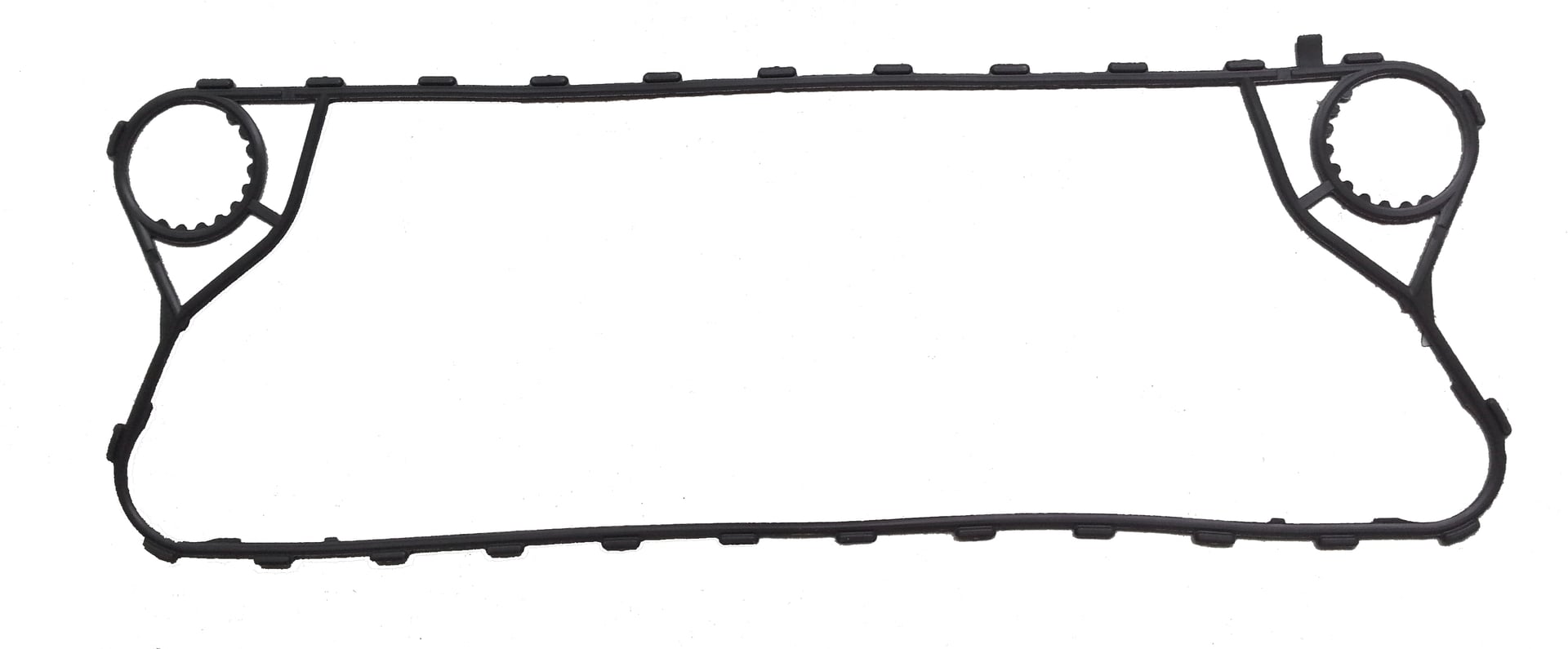
PHE Gaskets
Gaskets are essential sealing components for plate heat exchangers, installed in the sealing grooves around the plates to prevent fluid leakage. Gasket material selection is critical, requiring consideration of temperature resistance, pressure rating, chemical stability, and elasticity. Common materials include: NBR (-20 to +110°C, for water, oil, hydrocarbons), EPDM (-50 to +180°C, for hot water, steam, acids, alkalis), FKM/Viton (-55 to +230°C, for acids, alkalis, high-temperature oils), Silicone (-65 to +230°C, for some oils and alcohols), FTP (0 to +160°C, for concentrated acids, alkalis, high-temperature steam). Gasket attachment types include glued, hang-on, and clip-on (Paraclip).
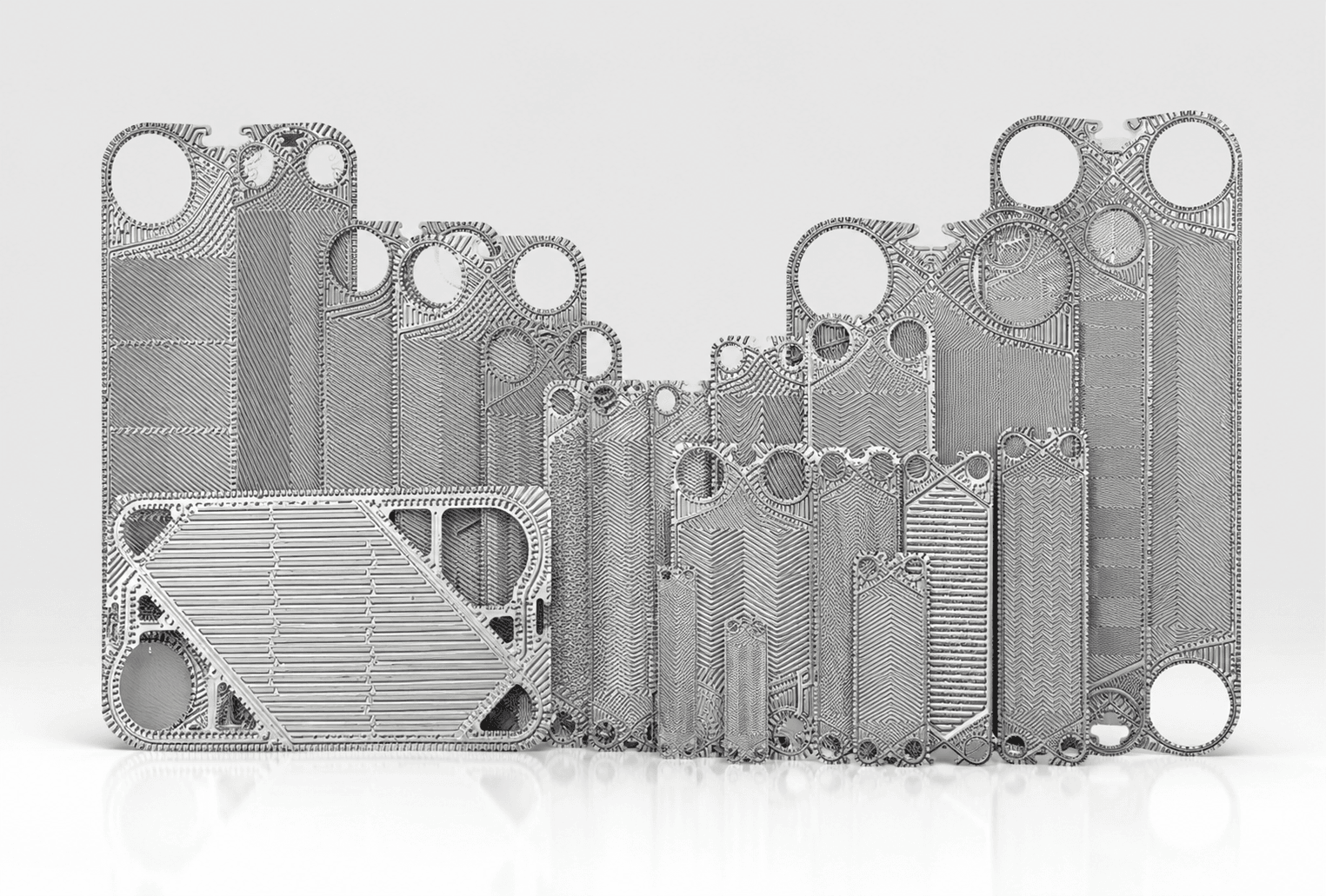
PHE Plates
Plates are the core heat transfer elements of PHEs, pressed from various metal sheets into different corrugation patterns. The plates form thin rectangular channels for heat exchange. Corrugation patterns include herringbone and washboard types, creating 3D rotating flow that generates turbulence at low Reynolds numbers, with heat transfer coefficients 3-5 times higher than shell-and-tube types. Common plate materials include: stainless steel (SUS304, 316L, 317L), titanium (Ti Gr.1, Ti-Pd), Hastelloy (C276, C22), nickel alloys, 254SMO. Plate thickness is typically 0.4-0.7mm, selected based on media corrosiveness and operating conditions.
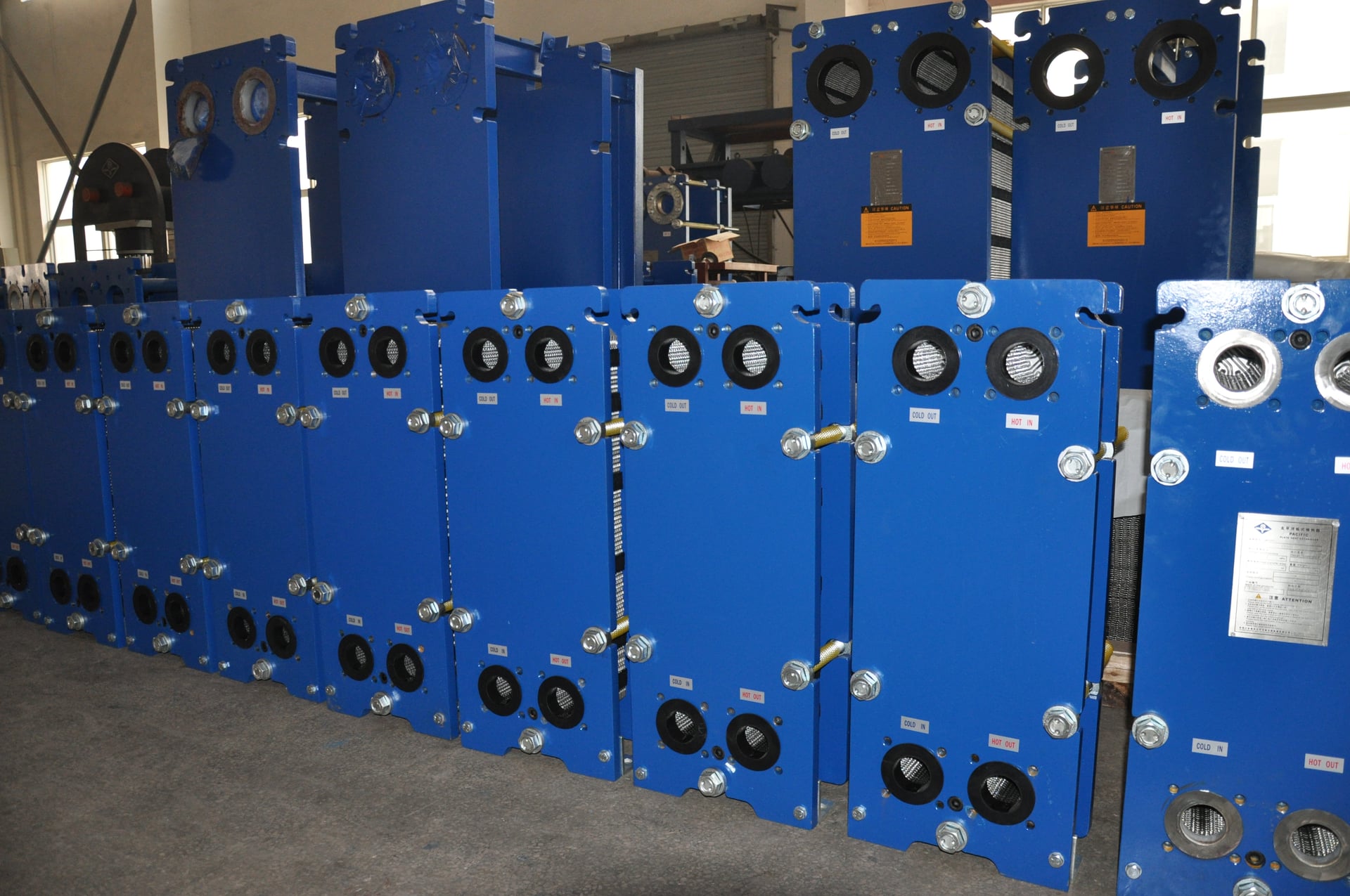
Detachable Plate Heat Exchangers
Detachable plate heat exchangers are the most common PHE type, consisting of a frame with fixed and movable plates, guide bars, and tightening bolts. Their key advantage is removable plates for easy cleaning and maintenance, with flexible heat transfer area adjustment by adding or removing plates. Compared to shell-and-tube exchangers, they offer 3-5x higher heat transfer coefficients at equal flow resistance, 1/5 to 1/8 the footprint, and up to 90%+ heat recovery. Operating temperature depends on gasket material (up to 180-230°C), max working pressure typically 2.5 MPa. Widely used in HVAC, chemical, food, marine, and power industries.
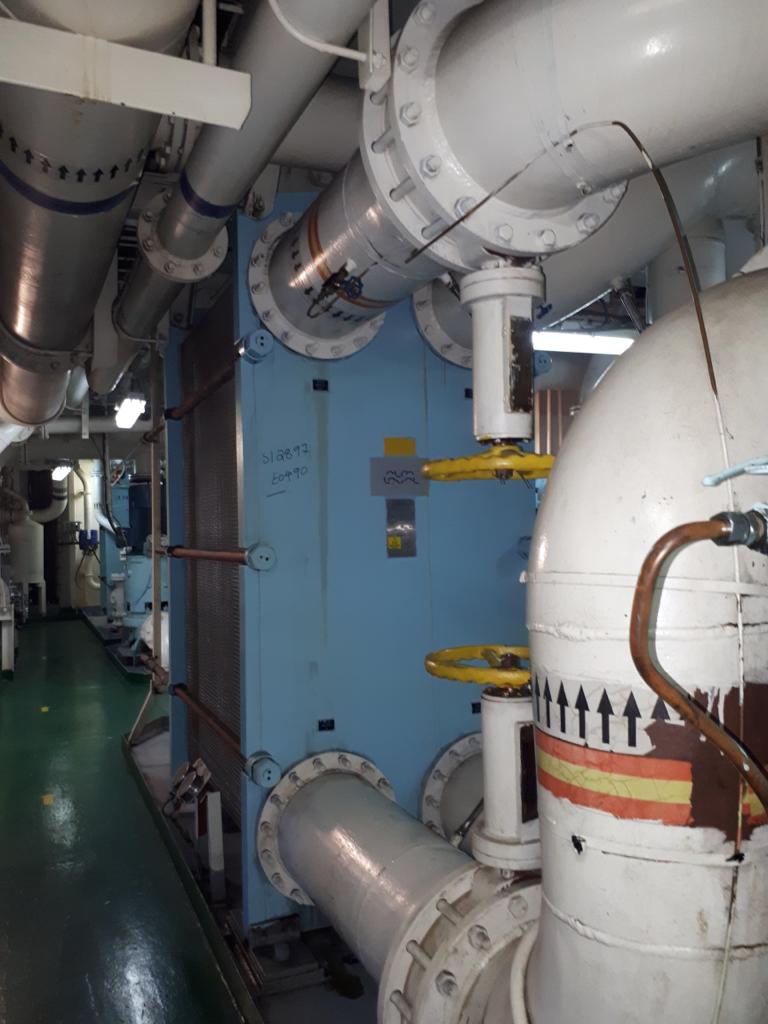
Marine Plate Heat Exchangers
Key marine applications include: central coolers (using titanium plates for seawater corrosion resistance, capacity up to thousands of kW), jacket water coolers, lubricating oil coolers, and fresh water coolers. Plate materials typically use Titanium Gr.1 for seawater corrosion resistance, with NBR or EPDM gaskets. Connections use flanged joints (DIN or JIS standards), design pressure typically 6-10 bar.
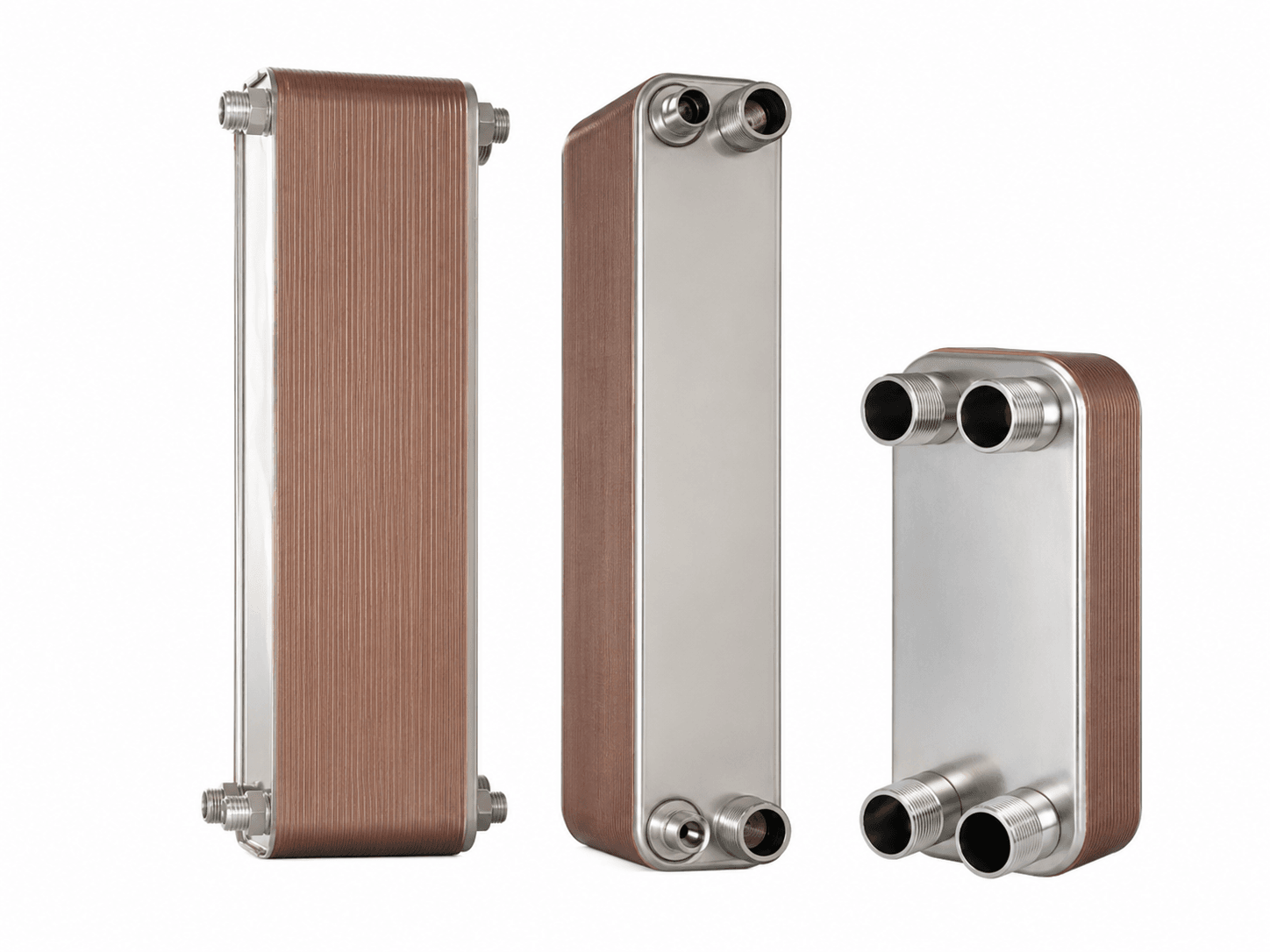
Brazed Plate Heat Exchangers
Brazed plate heat exchangers use copper or nickel as brazing material, welded in vacuum furnaces. They feature compact structure, light weight, high pressure capacity, and high heat transfer efficiency (>80%). Compared to gasketed types, they eliminate gaskets for better sealing and wider operating ranges. Copper-brazed models handle up to 30-45 bar, nickel-brazed up to 20 bar, temperatures up to 200-250°C. Plate materials are typically 304 or 316L stainless steel. Widely used in refrigeration (evaporators/condensers), HVAC, hydraulic oil cooling, floor heating. Volume is only 20-30% of shell-and-tube equivalents.
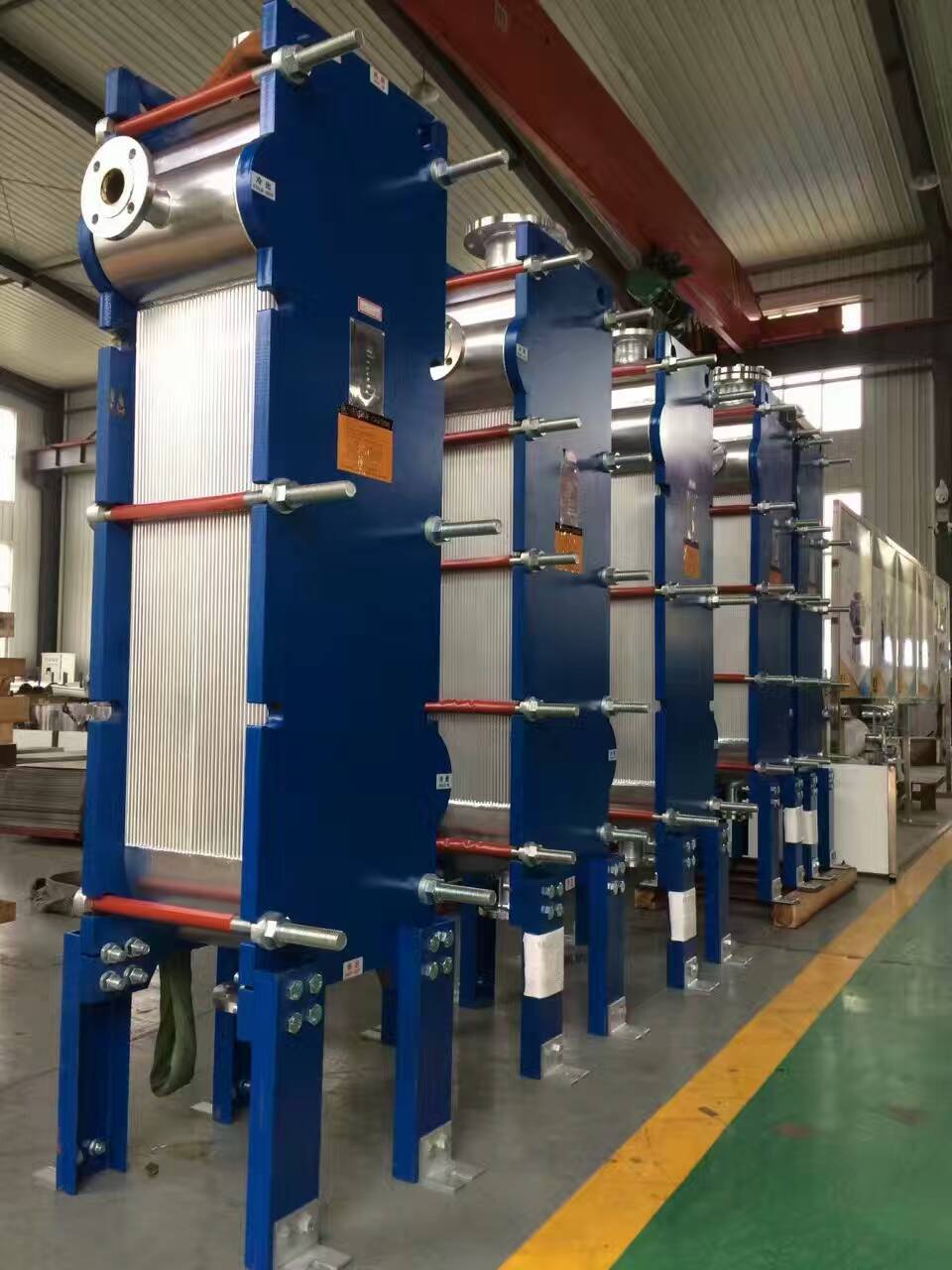
Welded Plate Heat Exchangers
Welded plate heat exchangers combine the high heat transfer efficiency and compact size of PHEs with the high pressure and temperature capability of shell-and-tube types. The heat exchange core is formed by alternating peripheral welding of plates, with overall heat transfer coefficients of 3500-6000 W/m²·°C. Temperature range from -196°C to 900°C, pressure from vacuum to 6.0 MPa. The welded construction causes scale to self-detach during thermal cycling. Widely used in chemical process, refining, and power generation for high-temperature/high-pressure conditions.
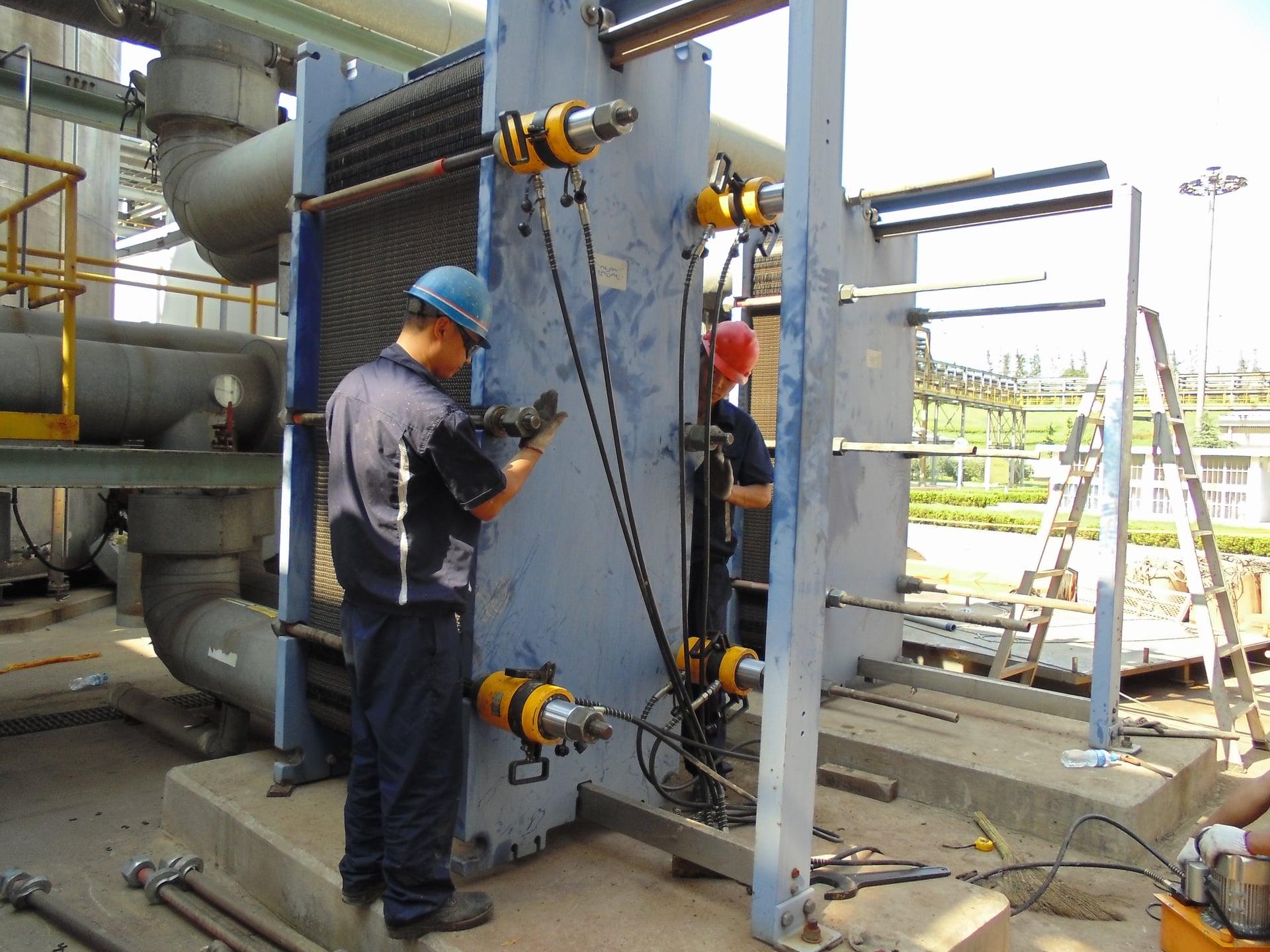
PHE Cleaning & Maintenance
Regular cleaning and maintenance of PHEs is essential for restoring heat transfer efficiency and extending equipment life. Methods include chemical cleaning (soaking, circulation) and mechanical cleaning. Chemical cleaning requires scale sample analysis to determine cleaning agents and procedures. Maintenance services also include gasket replacement (domestic gaskets typically last ~6 years), plate inspection, plate replacement, reassembly, and pressure testing. Acceptance criteria: 72 hours of leak-free operation, pressure testing per national standard NB/T47004. For plates over 7 years old, if more than 20 are damaged, full replacement is recommended.