
News
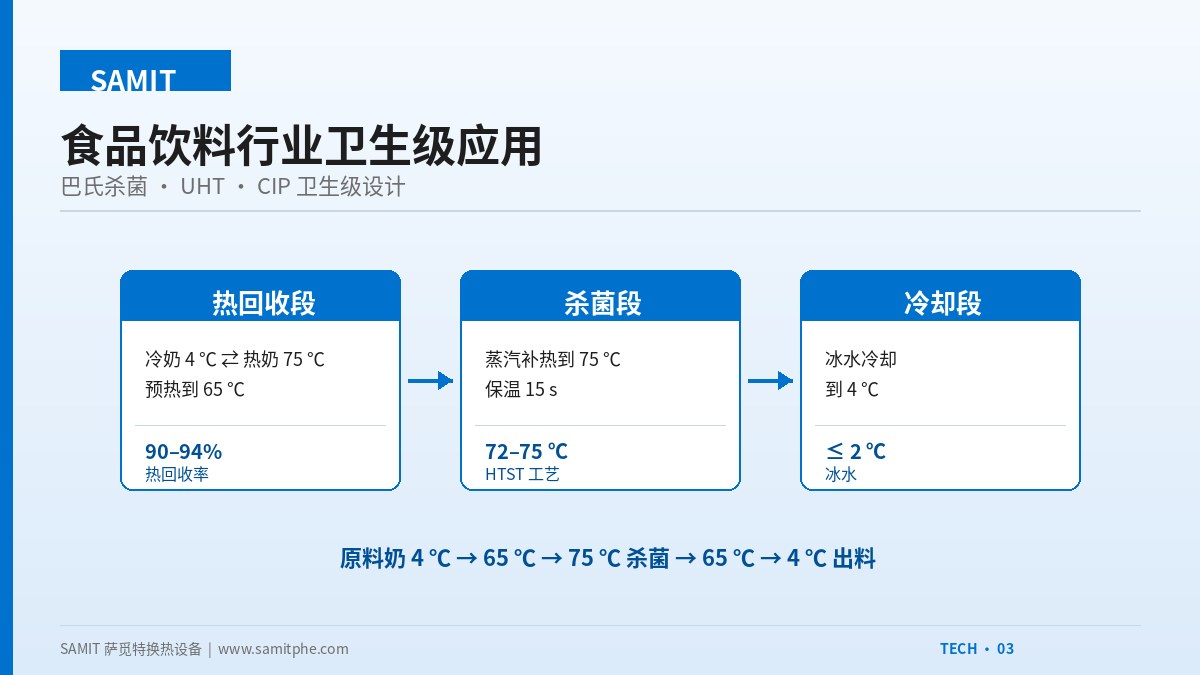
Sanitary Plate Heat Exchangers in the Food and Beverage Industry
Pasteurisation, UHT and CIP loops in dairy, juice, beer and beverage plants all rely on sanitary-grade plate heat exchangers. This article covers FB/BS-series material, gasket and structure requirements, with selection guidance.
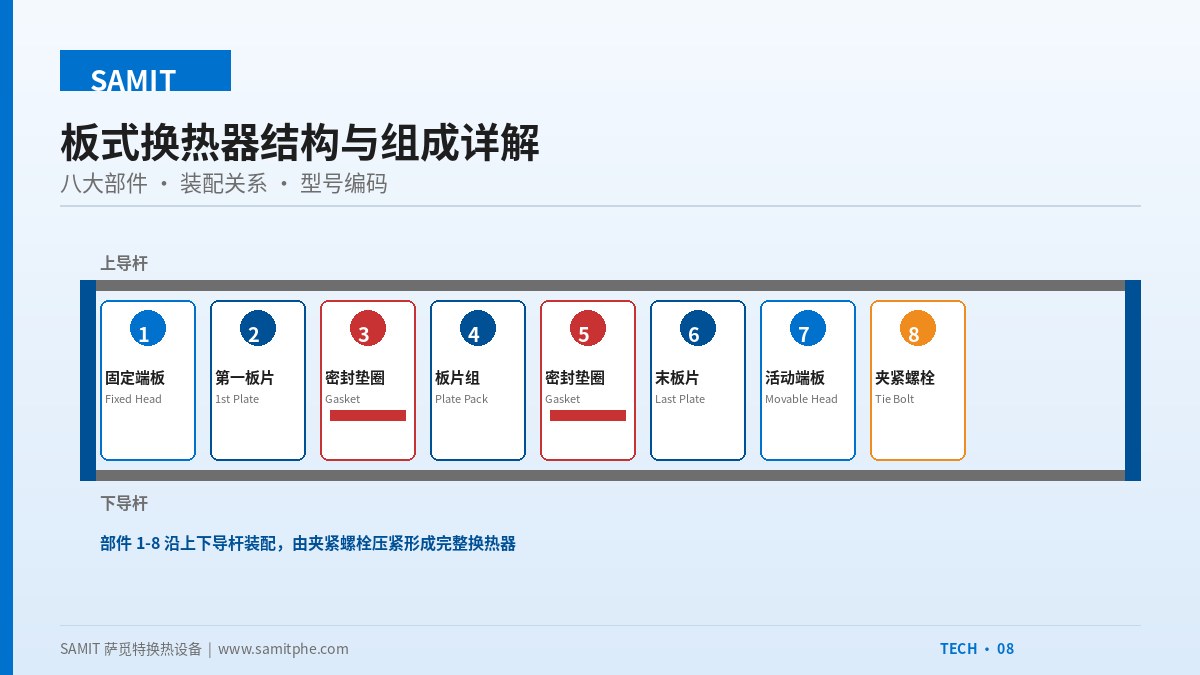
Plate Heat Exchanger Structure and Components: Eight Major Parts and Model Number Interpretation
A plate heat exchanger consists of eight major components: fixed frame plate, movable pressure plate, plate pack, gaskets, guide bars, tightening bolts, etc. This article breaks down the role of each component and explains PHE model number coding.
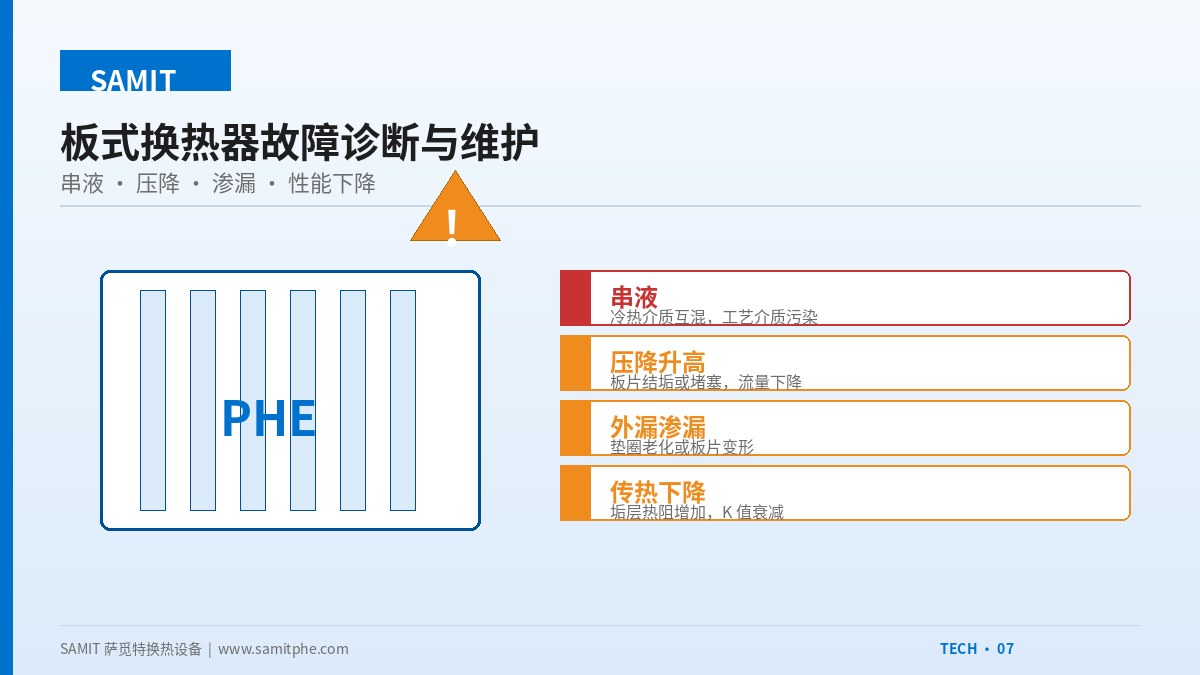
Plate Heat Exchanger Fault Diagnosis and Field Maintenance Manual
Cross-contamination, pressure-drop rise, external leakage, and performance degradation are the four major fault types of plate heat exchangers. This article provides causes, diagnostic procedures, and remedies for each, along with a periodic maintenance schedule that can significantly extend equipment life.
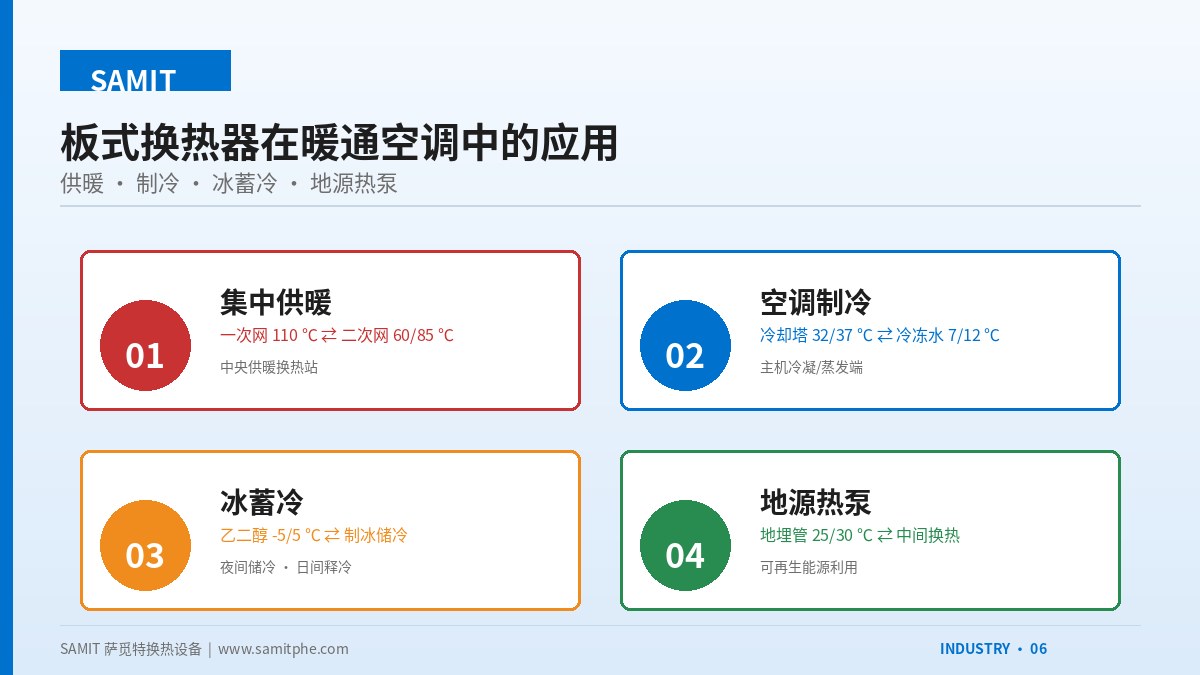
Four Major HVAC Applications of Plate Heat Exchangers
Plate heat exchangers are core heat-transfer devices in HVAC systems, covering four scenarios: central heating, air-conditioning refrigeration, ice storage, and ground-source heat pumps. This article outlines design conditions, selection essentials, and operating experience for each scenario.
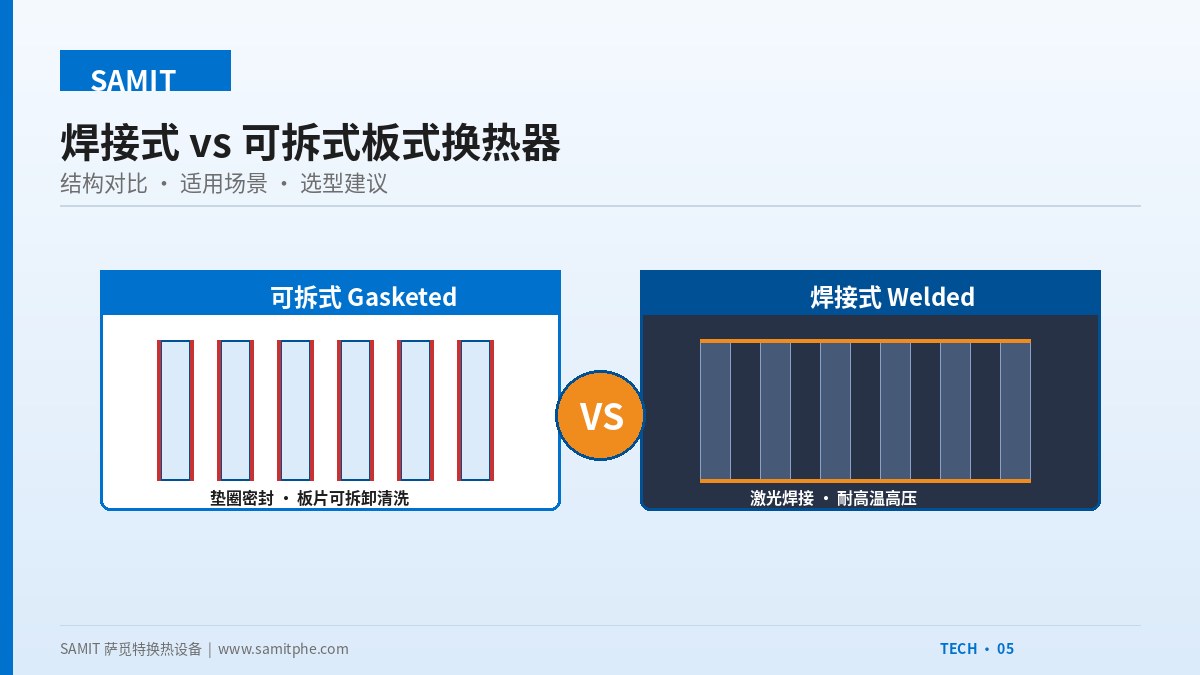
Welded vs Gasketed Plate Heat Exchangers: Structure, Performance, and Application Comparison
Welded and gasketed plate heat exchangers look similar, but differ significantly in structural principle, temperature/pressure resistance, and maintenance. This article compares the two product types across eight dimensions and provides clear selection boundaries.
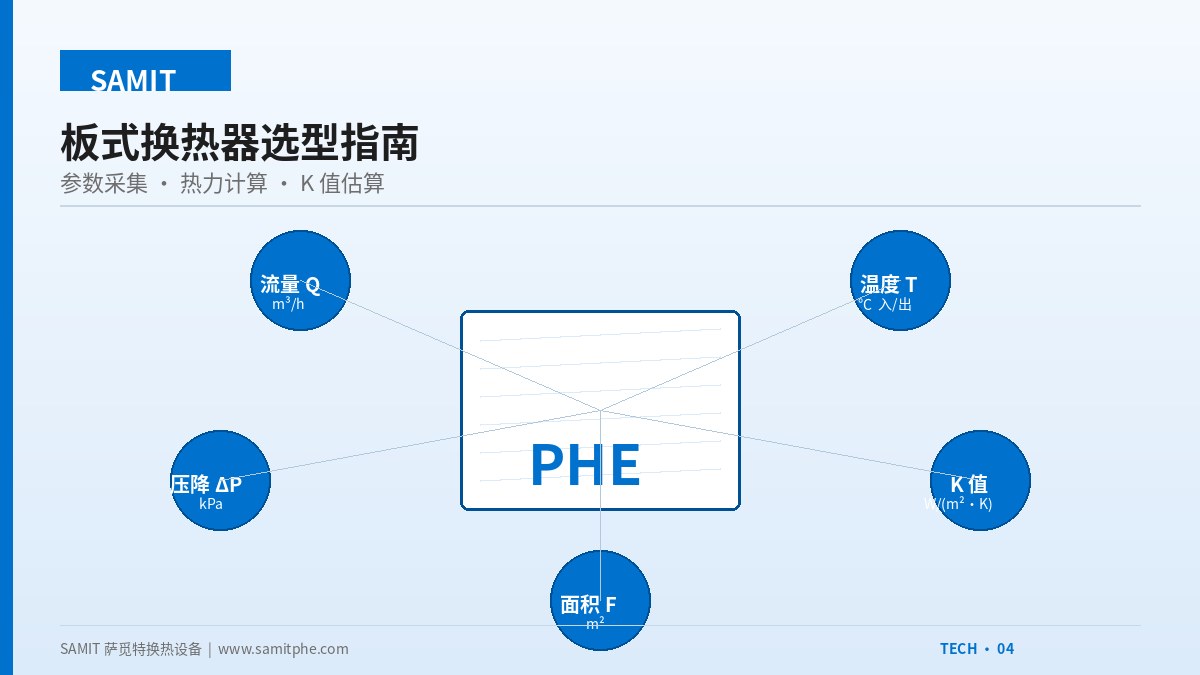
Plate Heat Exchanger Selection Guide: Parameter Collection, Thermal Calculation, and Case Validation
Plate heat exchanger selection is not as simple as "picking a model by flow rate." This article provides a checklist of six fundamental parameters, a five-step thermal calculation workflow, and demonstrates the complete derivation from operating conditions to model selection using a 4000 kW heating case study.
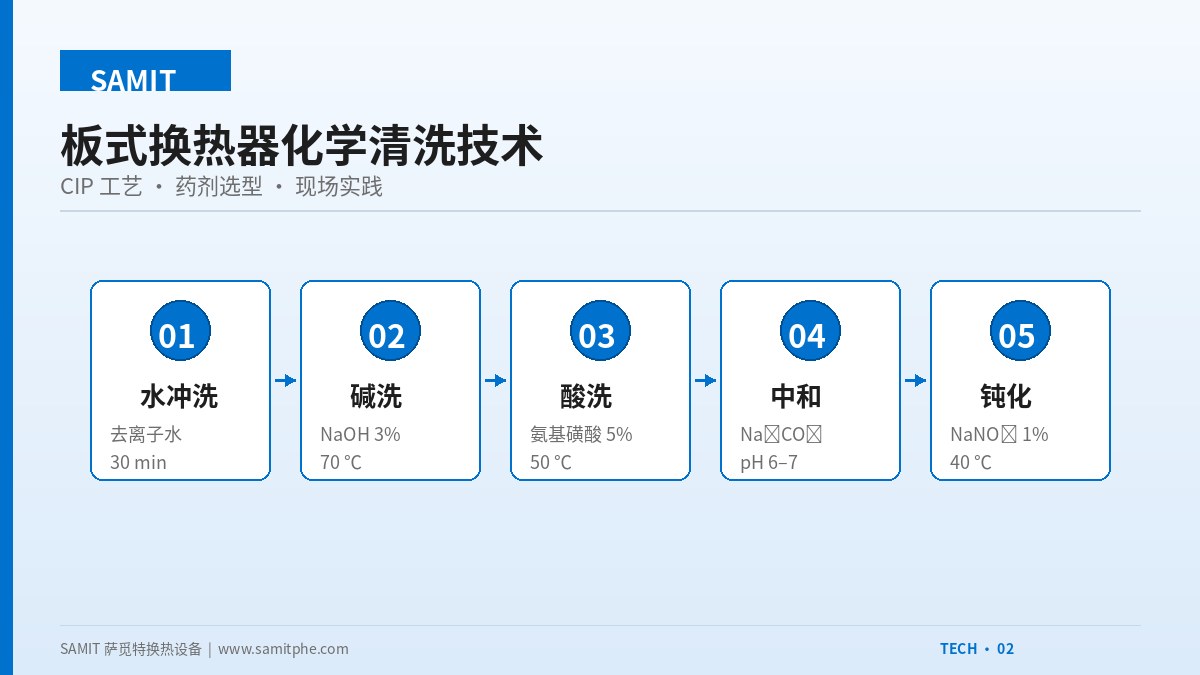
Chemical Cleaning of Plate Heat Exchangers: Process, Agents and Field Practice
Scaling can cut a PHE's heat-transfer coefficient by 30% within months. This article walks through the standard alkali-acid-passivation sequence, with an alumina-plant case study covering both detachable and non-detachable cleaning routes.
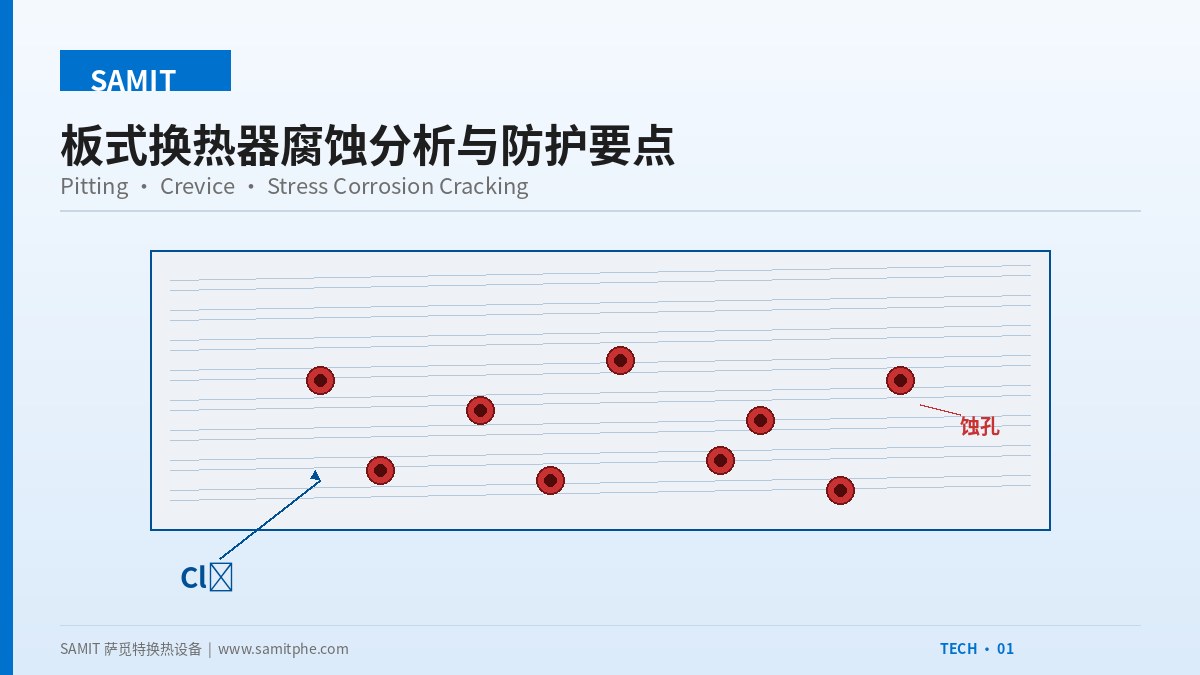
Corrosion Analysis and Protection of Detachable Plate Heat Exchangers
Plate corrosion is a leading cause of internal leakage and performance loss in PHEs. Based on a real steel-mill failure case, this article explains the stress-corrosion mechanism and proposes lifecycle protection measures from material selection to operation monitoring.